
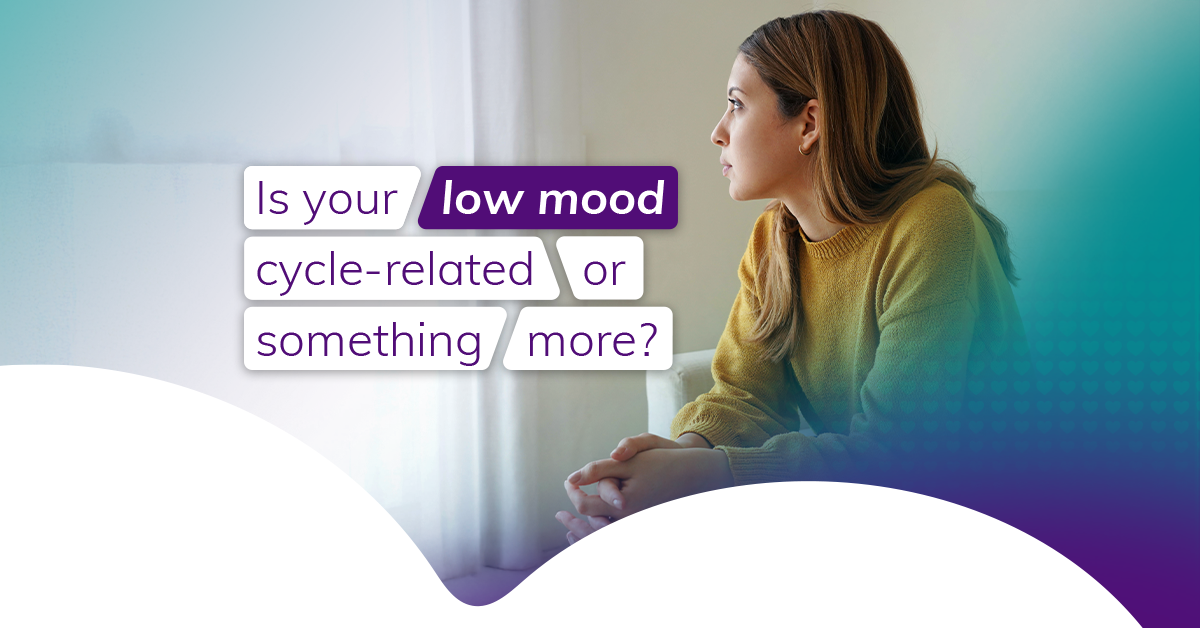
Is your low mood cycle-related or something more?
Vhi Clinical Psychologist, Dr Ruth McIntyre, sat with us to discuss the mood changes that are considered ‘normal’ or typical for a woman during her cycle, and what could be indicators of something more serious at play.
I’ll start by saying that (unfortunately!) it’s normal to have some mood changes leading up to your period, mainly due to the drop in hormones that occurs. But it’s important that women try to stay in tune with their body and emotions and don’t wave off new or extreme mood changes as part and parcel of their cycle. If you’re struggling, you don’t have to simply ‘put up with it’ ─ there are options available to help you cope.
What kind of emotions would be considered typical for cycle-related low mood?
A lot of women will notice changes in their mood occurring during the second half of their menstrual cycle, after ovulation and before menstruation but for some it can continue into the start of the next cycle. The emotional and physical changes that can occur during this time are commonly known as PMS or premenstrual syndrome. The reason these changes can happen are due to fluctuations in hormone levels, predominantly oestrogen and progesterone that have a knock-on effect on other hormones involved in mood regulation. This will vary from one woman to another, but during this time, women may experience symptoms such as:
- Low energy
- Fatigue
- Irritability
- Anxiety
- Low mood, sadness or tearfulness
- Sleep disturbances
- Feeling less vibrant or happy when compared to other stages of their cycle. It could be experienced as the absence of your usual positive emotions and feelings.
Around three out of four women report PMS symptoms that include/are similar to those mentioned above. Something to keep in mind is that each woman will have an individual ‘sensitivity’ to these hormonal fluctuations. Some women will feel a deeper impact emotionally, while others might be lucky and feel the effects less. A very small number of women may experience an extreme version of PMS called Premenstrual Dysphoric Disorder.
What sort of feelings or behaviours would fall outside of what’s typical for women during their cycle?
If you begin to experience severe low mood that's impacting your day-to-day life, this is not standard for PMS. It’s important to speak to your healthcare provider if you’re experiencing any of the following:
- Your mood is so low that you can't get out of bed or have no appetite
- You don’t feel like you can function as you usually would and your symptoms are persistently interfering with your daily life
- Your social life, relationships or work are taking a hit because of how you feel
- You experience extreme mood swings
- You experience severe anxiety or anger
- You have intense feelings of hopelessness or worthlessness
- There are serious changes to your cognition, like decreased memory or bad brain fog
- Any thoughts of self-harm or suicide are coming to mind; you immediately need to reach out to your healthcare provider or emergency services for help.
These symptoms could be signs of depression or other mental health issues, especially if they last for more than two weeks. Once your next menstrual cycle begins, hormones typically start rising again, and mood should slowly improve. If this isn’t happening for you, speak to your healthcare provider for some guidance.
Can the emotional impact of PMS and menstruation be more severe for women with conditions like endometriosis?
For sure. Conditions like endometriosis can intensify both the physical and emotional symptoms of PMS and menstruation, in part due to inflammation in the body and an increased sensitivity to hormonal shifts. Aside from the direct emotional impact of these conditions, if you’re having to deal with increased pain during your cycle, this could absolutely impact your mood. There’s also the often long and difficult process of getting diagnosed, which understandably takes a huge emotional toll.
Can hormone fluctuations make existing mental health conditions feel worse?
Yes, many pre-existing mental health conditions can be exacerbated by hormonal shifts, including those that occur during a woman’s menstrual cycle. As we’ve discussed, our mood is regulated by our hormones Fluctuating hormone levels can impact cortisol, a stress hormone, as well as serotonin, known as a ‘feel-good hormone’ and dopamine, both of which are important for regulating mood. Thyroid hormones also play a role. The hormonal changes during pregnancy, menopause and the menstrual cycle can impact symptoms of mental health conditions, such as anxiety and depression. All of this won’t be the case across the board, of course ─ some women may not notice a worsening or change in their mental health due to their cycle.
It’s worth noting there's some research that shows there's an increase in hospital admissions for mental health issues in the lead up to women's periods. This is such a sobering and upsetting finding, and it’s important for women to know there is always support available, and to never worry things aren’t difficult ‘enough’ to warrant asking for help.
When should a woman speak to their healthcare provider about their low mood?
If your symptoms are persisting for more than two weeks, that’s a warning sign, and you should speak to your healthcare provider. Nobody knows your body better than you, so if your gut is telling you something is going on or you feel like you’re not coping, listen to it. It can be difficult to admit you’re overwhelmed or struggling, especially due to pressures to juggle 101 things, but it's absolutely worth paying attention to and seeking help.

This content is for information purposes only and is not intended or implied to be a substitute for professional medical advice, diagnosis, or treatment. Always seek advice from your GP or an appropriate medical professional if you have concerns about your health or before commencing a new healthcare regime. If you believe that you are experiencing a medical emergency call 999 / 112 or seek emergency assistance immediately.
Dr Ruth McIntyre